
How to Read Your Main Panel Label Before Sizing Solar
You swing the panel door open with a flashlight and find a printed label most people never read. Three numbers on that sticker — bus rating, main breaker size, open spaces — often decide whether solar interconnection is straightforward or becomes a surprise upgrade line item.
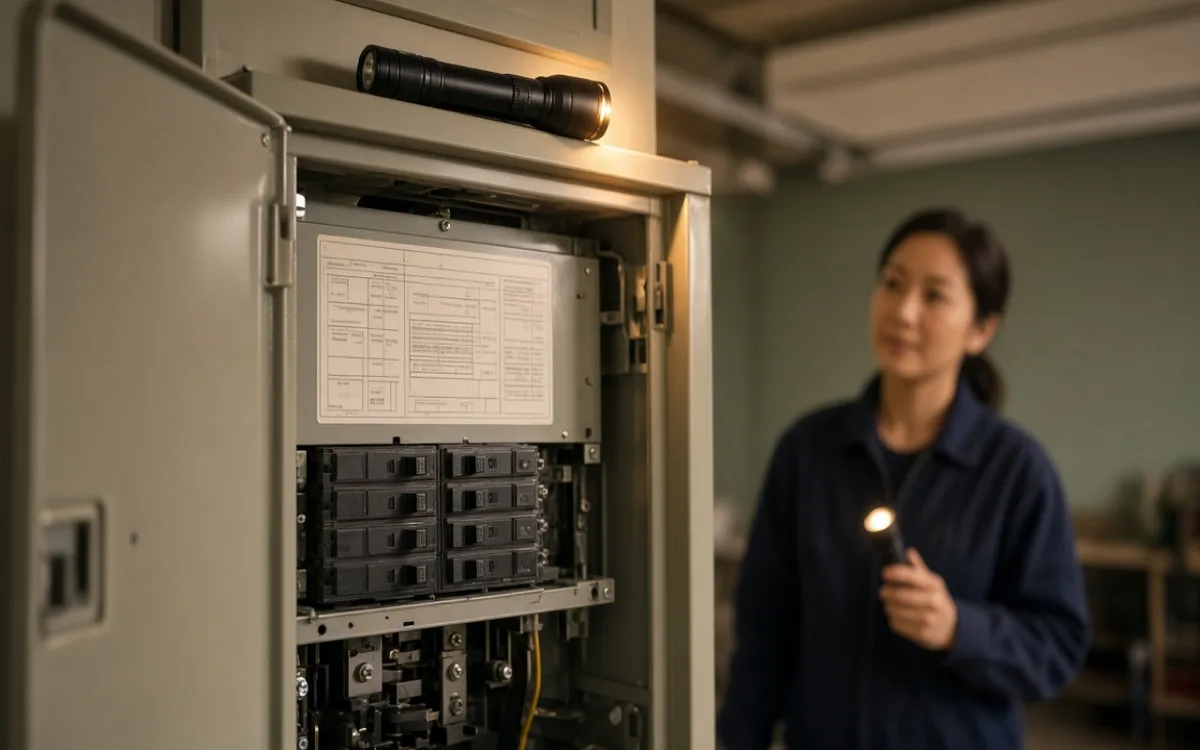
What the sticker is actually telling you
Every listed residential panel has a factory label on the inside of the door or on the box itself. It names the manufacturer, lists maximum voltage, and — most importantly for your conversation — states the bus rating and the maximum main breaker allowed. You are not interpreting wiring here. You are reading published limits the same way you would read tire pressure on a door jamb.
If the label is faded, a photo with flash often recovers enough text for your notes. Do not touch breakers, remove cover screws, or probe inside the cabinet. Standing back with the door open is enough for what you need today.
Main breaker size is not the whole story
Homeowners often memorize one number: the main breaker stamped on the handle — 100, 125, 200 amps. Installers care about that, but they also care about the bus bar rating printed on the label, which can differ. A 200-amp main on a 125-amp bus is not a combination every jurisdiction accepts for adding a solar backfeed breaker.
Solar equipment connects through a dedicated breaker that pushes power into the panel. Local rules and panel listings determine how much backfeed is allowed without a main panel upgrade or a line-side tap installed by a licensed electrician. You do not need to calculate that yourself. You need to know whether your label gives an installer room to work or flags a conversation early.
Fields worth copying into a note
- Bus rating — often printed as maximum ampacity of the bus.
- Maximum main breaker size — may match or differ from the handle you see.
- Panel model or catalog number — helps permit reviewers look up listings quickly.
- Number of spaces filled versus empty — visible without counting individual wire sizes.
Counting spare spaces from the doorway
Scan the column of breakers without removing anything. Empty slots look like blank filler plates or open positions ready for a breaker. Some panels use thin tandem breakers that squeeze two circuits into one slot — from the doorway you may not see that detail, and that is fine. A rough empty-slot count still answers a basic question: is this panel already packed?
A crowded panel is not automatically a dealbreaker. It may mean a subpanel elsewhere in the house, a load-side connection strategy, or an upgrade quote. What you want to avoid is learning that after panels are ordered. A photo showing two or three open spaces tells a different story than a photo where every slot is occupied.
The label is the panel’s birth certificate. Proposals that skip it are guessing about the hardest part of the job.
Signals that an upgrade talk is coming
None of the following mean solar is impossible. They mean the first conversation should include electrical scope, not just roof layout.
- Main breaker handle reads 100 amps in a house with electric range, central air, and a garage workshop — load may already be tight.
- Label bus rating is lower than the main breaker size — verify with an electrician before assuming headroom.
- No empty breaker spaces visible and no subpanel in the garage — new breaker placement needs a plan.
- Panel brand and model look decades old — listings may not allow modern backfeed methods without replacement.
- Rust, scorch marks, or a door that will not stay closed — safety issues override solar scheduling until corrected.
What to send before the site visit
Photograph the label straight-on, plus one wider shot showing how full the panel is. Redact serial numbers if you prefer — amp ratings and model text are what matter. Mention where the panel sits: garage wall, exterior back of house, closet off the kitchen. Distance to the proposed inverter location affects conduit runs and sometimes code paths.
If an installer’s proposal never references your panel specs, ask why. A layout drawn on satellite imagery alone cannot confirm interconnection. The label takes five minutes to read and can save weeks of reordering equipment that never had a place to land.